Veggie Paella
August 15, 2026
Rate this recipe
Ingredients
- 1 tbsp olive oil
- 1/8 tsp salt
- 2 tbsp green onions (green parts only)
- 1 tsp smoked paprika
- 1/2 tbsp tamarind paste
- 3/4 cup paella rice (Bomba, Calasparra or Bahia/Senia)
- 1 cup chickpeas, drained and rinsed
- 4 cups vegetable broth
- 1/2 tsp saffron threads (not too much!)
- 1 red bell pepper, diced
- 2 tbsp black olives, diced
- 1/4 cup fresh parsley, chopped
- 1/2 cup frozen green peas (or fresh peas)
- 4 carrots, sliced (orange carrots preferred)
Instructions
- 1In a Dutch oven, cook green onions (green parts only) in olive oil over medium heat for about 60 seconds until softened.
- 2Mix tamarind paste with 2 tbsp water to create a slurry; stir this into the green onions and cook for 1 minute to distribute the tangy flavor throughout the oil.
- 3Stir in paella rice until all grains are well coated with oil, about 1 minute.
- 4Add the vegetable broth, paprika, saffron threads, drained and rinsed chickpeas, sliced carrots, frozen green peas, diced red bell pepper, and salt. Stir well to combine.
- 5Bring the mixture to a boil over medium-high heat, then reduce heat to medium-low.
- 6Cook uncovered for 40 minutes or until the rice is fully tender and has absorbed most of the broth, stirring occasionally. Add a little more water (2–3 tbsp at a time) if the rice begins to dry out before it is fully cooked.
- 7Remove from heat, stir in fresh parsley and diced black olives, then serve immediately.
Recipe adapted from: Unknown
About This Dish
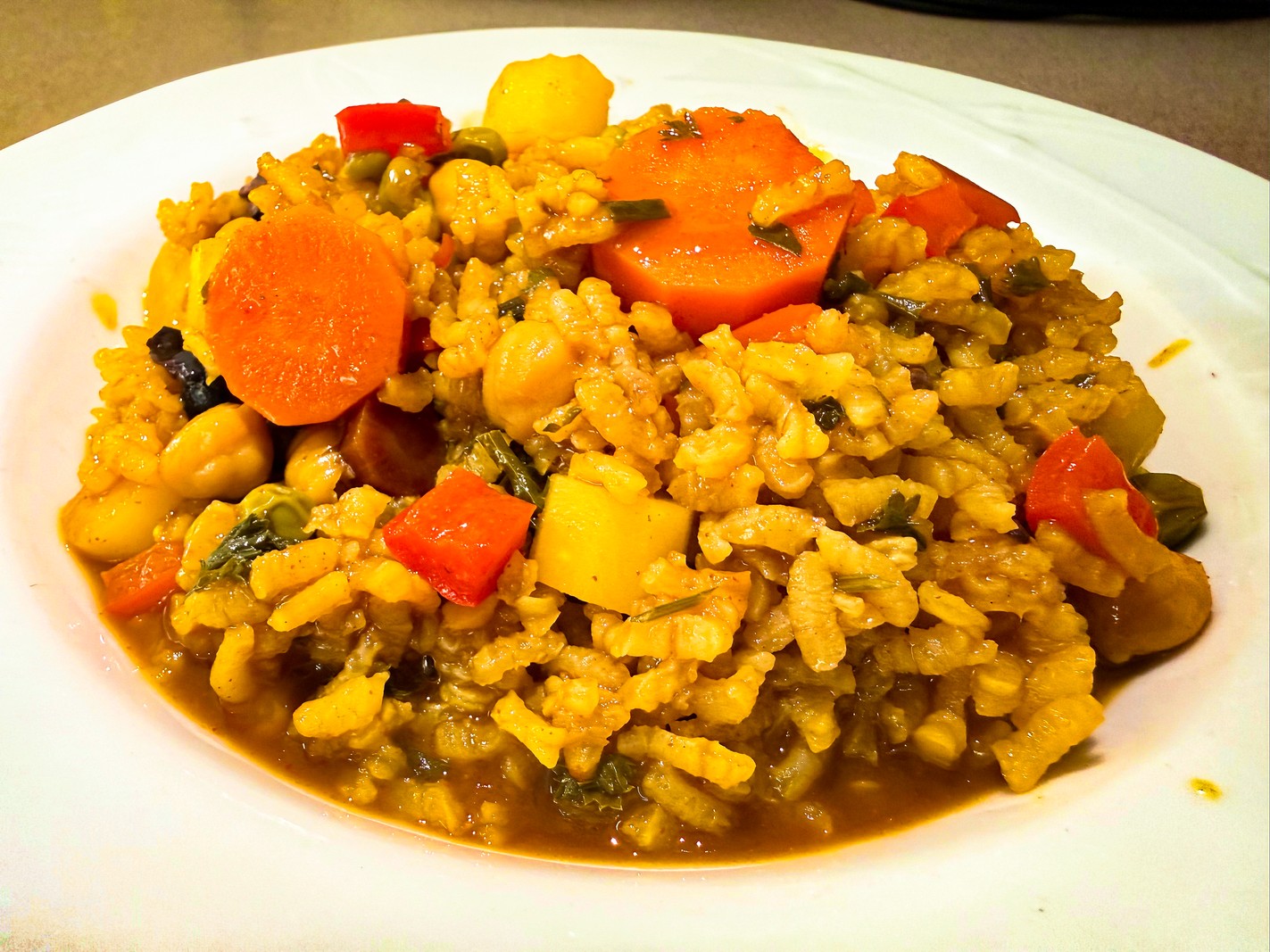
Paella is Spain's most famous rice dish, traditionally cooked in a wide, shallow pan over an open fire. This vegetarian version captures the vibrant colors and flavors of the classic — golden saffron rice, smoky paprika, tender vegetables, and briny black olives — while being completely plant-based and formulated to be gentle on sensitive digestive systems. Perfect for a weeknight dinner or weekend gathering.
The Rice Makes the Difference
Using the correct rice is essential for authentic paella texture:
- Paella rice: Look for Bomba, Calasparra, or other Spanish short-grain rice varieties
- Why it matters: These rice types absorb liquid without becoming mushy, creating distinct grains
- Substitutions: Arborio rice (for risotto) can work in a pinch, though texture will be creamier
- Don't use: Long-grain rice like jasmine or basmati won't give you authentic paella texture
Saffron: A Little Goes a Long Way
- Proper amount: 1/2 tsp saffron threads is plenty—more can make the dish bitter
- Quality matters: Real saffron is expensive but provides unique flavor and color
- Budget alternative: Use 1/4 tsp turmeric + 1/4 tsp paprika for color (flavor will differ)
- How to use: Crumble threads directly into the broth or steep in warm broth first
Low-FODMAP by Design
This recipe is published low-FODMAP as-is — no substitutions needed at the table:
- Green onions, green parts only: Adds mild onion flavor without the fructans concentrated in the white bulb
- No onion or garlic bulb: Savory depth comes from paprika, saffron, and broth instead
- Tamarind paste in place of tomato: Delivers the tangy depth a tomato-based paella would have, without the acidity or FODMAP load of canned tomatoes
- Black olives: Provide salty, briny flavor; halve them or skip if you're also limiting sodium
One-Pot Wonder Tips
- Use a Dutch oven: Wide surface area helps rice cook evenly
- Don't over-stir: Unlike risotto, paella rice shouldn't be stirred constantly
- Watch the liquid: Add water if rice seems dry; it should absorb all the broth
- Socarrat bonus: Let rice sit undisturbed for the last 5 minutes to create a crispy bottom layer (optional)
Vegetable Variations
- Bell peppers: Red is called for here, but yellow or orange work beautifully
- Frozen peas: Added toward the end of cooking so they don't overcook
- Zucchini: Swapped in for the olives in the Low-Histamine variant below — dice and add during the last 15 minutes if you'd like it in the original too
- Artichoke hearts or green beans: Both are traditional paella additions if you want to bulk up the vegetables further
Smoked Paprika Is Key
- Pimentón de la Vera: This Spanish smoked paprika is traditional and distinctive
- Sweet vs. hot: Sweet smoked paprika (dulce) is most common; use hot (picante) for spice
- Regular paprika: Won't have the smoky depth, but still adds color and mild flavor
- Store properly: Keep in an airtight container away from light to preserve flavor
Serving Suggestions
- Straight from the pot: Paella is traditionally served family-style from the pan
- Lemon wedges: Fresh lemon brightens the dish (if citrus is tolerated)
- Fresh parsley: Extra chopped parsley on top adds color and freshness
- Crusty bread: Serve with gluten-free or regular bread for soaking up flavors
- Simple salad: A side of mixed greens with olive oil balances the hearty rice
Make-Ahead & Storage
- Prep vegetables: Dice the bell pepper and carrots the day before
- Leftovers: Refrigerate in an airtight container for up to 4 days
- Reheating: Add a splash of broth and reheat gently to prevent drying out
- Freezing: Freezes well for up to 3 months; thaw overnight in the fridge
- Low-Histamine variant: Skip the make-ahead and leftovers above — that version is best eaten fresh (see below)
Low-Histamine Variant
Use the diet toggle above to switch this recipe to its Low-Histamine version, which changes a few ingredients specifically to lower histamine load:
- Tamarind paste is dropped: tamarind is a histamine-releasing food for some people, so the variant seasons the broth more simply instead
- Black olives are dropped: cured olives are one of the highest-histamine ingredient categories
- Zucchini fills in for the volume the olives and tamarind left behind
- Chickpeas are cooked from dry and frozen right away rather than canned — canned legumes sit for longer and build up more histamine than freshly cooked ones
- Use a genuinely fresh vegetable broth, not a bouillon cube or concentrate — these often contain yeast extract, a common histamine trigger
- Best eaten right away: histamine builds in cooked food as it sits, more than in most dishes, so this version doesn't keep as leftovers the way the original does
Why This Works for Sensitive Stomachs
- No onion or garlic bulb: Uses only the green parts of green onions instead
- No tomato: Tamarind paste stands in for the acidity a tomato-based paella would bring
- Easily digestible: Well-cooked rice and vegetables are gentle on the gut
- Plant-based protein: Chickpeas are easier for many people to digest than heavy meats
- Two dietary tracks: Toggle to Low-Histamine above if tamarind, olives, or canned legumes are triggers for you
Comments
No comments yet. Be the first!
Leave a comment
Recipe Reviews
Share your experience with this recipe!
Please sign in to write a review for this recipe.
Community Reviews
No reviews yet. Be the first to share your experience with this recipe!